2016 · Environment and bindings
Export a design preview with its scope intact
Produce a reproducible local environment proposal while retaining original package provenance and explicit no-deployment flags.
Open a workspace beside this lesson. Protected links keep their existing access gates; no new permission is granted by this course.
Why this matters
A useful export needs the chosen source option and its lineage, not a screenshot alone.
A browser-local proposal must not be mistaken for a newly issued or deployed configuration.
Read the screen with the explanation
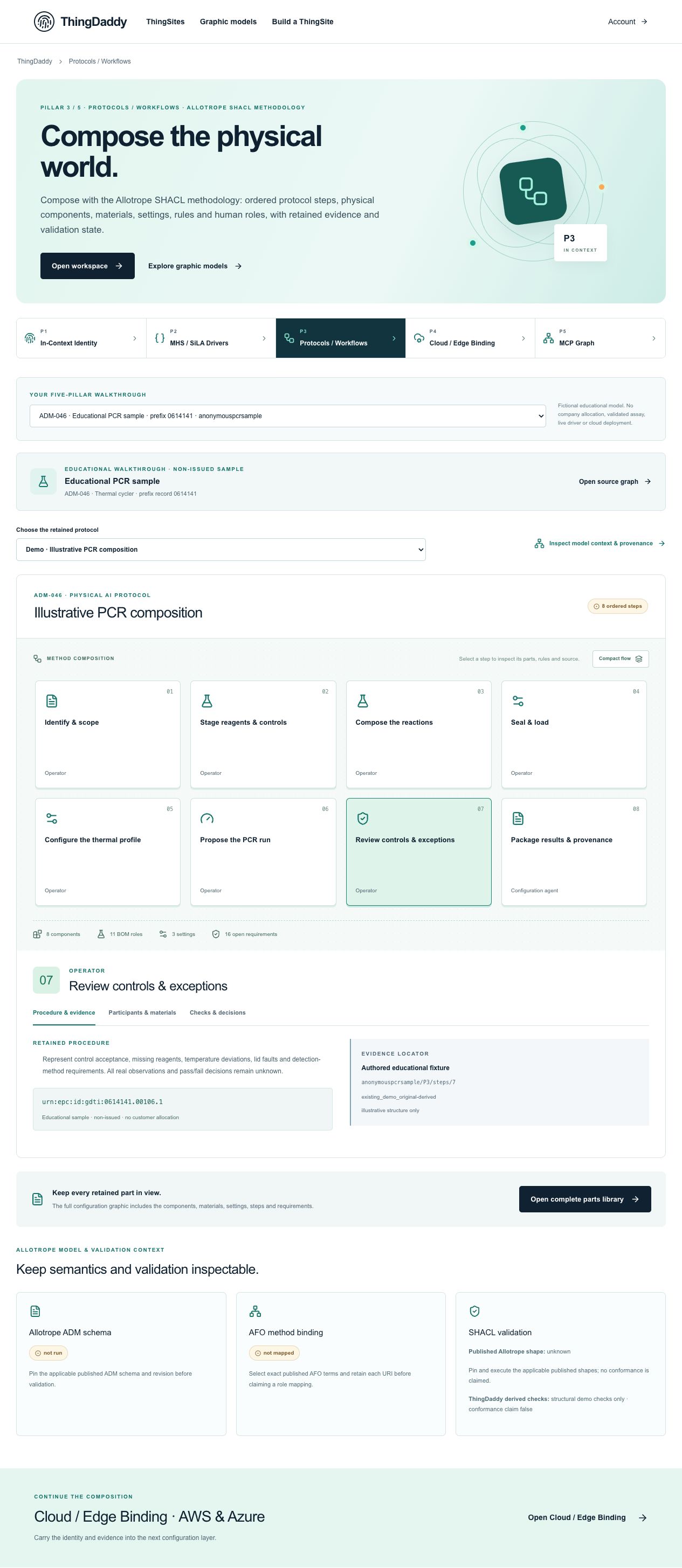
Earlier anonymous demonstration capture · Earlier local anonymous educational preview; not current physical execution or hosted acceptance · not evidence that this exercise has been performed. Open the image for full resolution.
Screenshot provenance
SHA-256 979a611a56f9ec76fdc14cda9f2f228ccf7ed09b3bc20db3571a4bb68ed7cf75Captured 2026-10-13T06:48:55.658Z. Source-package pin: 2f78a982141bda51ba64ea8ccb3a07f527eec3f77cf89baaa1f05c102197f6fd. Original screenshot bytes preserved.
Step by step
01 Choose the intended source option
Screen or control: AWS or Azure provider card
Why: The export should reflect the pattern you actually reviewed.
How: Open P4, select Azure and read its mapping and missing binding requirements.
What you should see: The view previews the retained Azure option without creating resources.
Verify: Record the selected design GDTI 00402.1 and confirm it differs from the AWS option.
02 Download the scoped preview
Screen or control: Download design preview
Why: The machine-readable proposal should preserve lineage and gates.
How: Select Download design preview and open the downloaded thingdaddy-cloud-edge-design-preview.json.
What you should see: The wrapper contains providerPattern, originalSelectionState, configurationGdti and requiredBindings.
Verify: Check providerPattern.provider is Azure and sourcePrefix is the exact string 0614141.
03 Verify boundary flags and source pin
Screen or control: Downloaded JSON · originalSelectionState and submissionSha256
Why: A file should not imply more than the operation actually performed.
How: Check previewOnly:true and the no-authorization/no-deployment flags. Compare submissionSha256 with b06ee255d0943a048511092595db4b98281b9b761d1910d19e6c3dba82591d94.
What you should see: The file is a pinned source-derived proposal, not a provisioning receipt or new identifier assignment.
Verify: configurationGdti remains the supplied sample reference; the export does not assign a new GDTI or SRIN.
04 Confirm the source remains unchanged
Screen or control: AWS provider card · Public package link
Why: UI choice and immutable source must stay distinct.
How: Switch back to AWS and read the original public package. Compare its two candidatePatterns and boundaries with your exported preview.
What you should see: Both original options remain in the package and resources/deployment states remain false.
Verify: Keep the original package and exported selection separate in your deliverables. Do not report the preview as a saved private-site version.
What is happening under the surface
The Download design preview control exports a wrapper containing sourceLane, sourcePackage, sourcePrefix and submissionSha256.
providerPattern and originalSelectionState describe the chosen retained option; configurationGdti is the existing sample configuration reference.
previewOnly is true; customerAuthorized, deploymentPerformed and executionAuthorized are false. This export does not mutate the source package.
Common mistakes
- The existing configuration GDTI is not newly assigned by the export.
- A file hash or downloaded filename is not a new physical-asset identity.
- Do not imply the private version-save or publication workflow was exercised by this local preview.
The records an agent needs
Export-prefixed field names describe the download wrapper, not new fields inserted into the source package. A download does not create an immutable private-site history revision, cloud deployment or execution event.
Exact retained identities
urn:epc:id:gdti:0614141.01200.1urn:epc:id:gdti:0614141.00402.1Anonymous package occurrence pointers
#/P4/cloud/candidatePatterns/1#/P4/deploymentGates/unresolvedRequirements#/P1/configurationGdti#/boundariesFields or record paths to inspect
export.sourcePrefixexport.submissionSha256export.previewOnlyexport.providerPatternexport.originalSelectionStateexport.configurationGdtiexport.requiredBindingsexport.deploymentPerformedPointers locate records; hashes pin bytes; lesson numbers locate teaching material. None substitutes for an applicable assigned GS1 identity.
Apply what you learned
Prepare an environment-design handoff bundle that a reviewer could inspect safely.
Prepare these outputs
- The downloaded Azure preview.
- The original package SHA and exact source option pointer.
- A plain-language handoff identifying unresolved bindings and no-deployment scope.
Review your work against these checks
- The package lineage and source prefix match exactly.
- All preview/authorization/deployment flags retain their actual values.
- Original source and selected preview are preserved separately.
Check your reasoning
What is configurationGdti in this design-preview file?
This answer stays in page memory, is cleared when you leave, and is not sent or recorded as certification, validation or authority.Source and current boundaries
Screen basis: the anonymous public educational fixture at /api/demo/pillars, namespace 0614141. No private company record is read by this course.
Pinned assessed package SHA-256: b06ee255d0943a048511092595db4b98281b9b761d1910d19e6c3dba82591d94. Its complete graph contains 329 nodes and 231 directed relationships; original excluded assertions remain separately retained provenance. Lesson locators are educational numbers, not issued GS1 keys.
Scope: fictional authored records, non-issued identity proposals, unknown authority, no physical command, assay validation, cloud deployment or execution authorization.
fictional authored, non-issued, read-only
b06ee255d0943a048511092595db4b98281b9b761d1910d19e6c3dba82591d94Open primary referenceReading, answering a question and opening a diagram do not issue identifiers, validate a scientific method, establish company authority, commission an environment or authorize physical action.