2021 · Whole-site journey and practice
Start at the front door and choose a scope
Distinguish identity discovery, educational viewing and permission to inspect a private workspace.
Open a workspace beside this lesson. Protected links keep their existing access gates; no new permission is granted by this course.
Why this matters
The front door helps a human find a context. It does not decide which company owns an identity, and it does not grant an agent access to the records behind a result.
A client needs to know whether they are exploring the fixed anonymous sample or entering a protected source library before making any design decisions.
Read the screen with the explanation
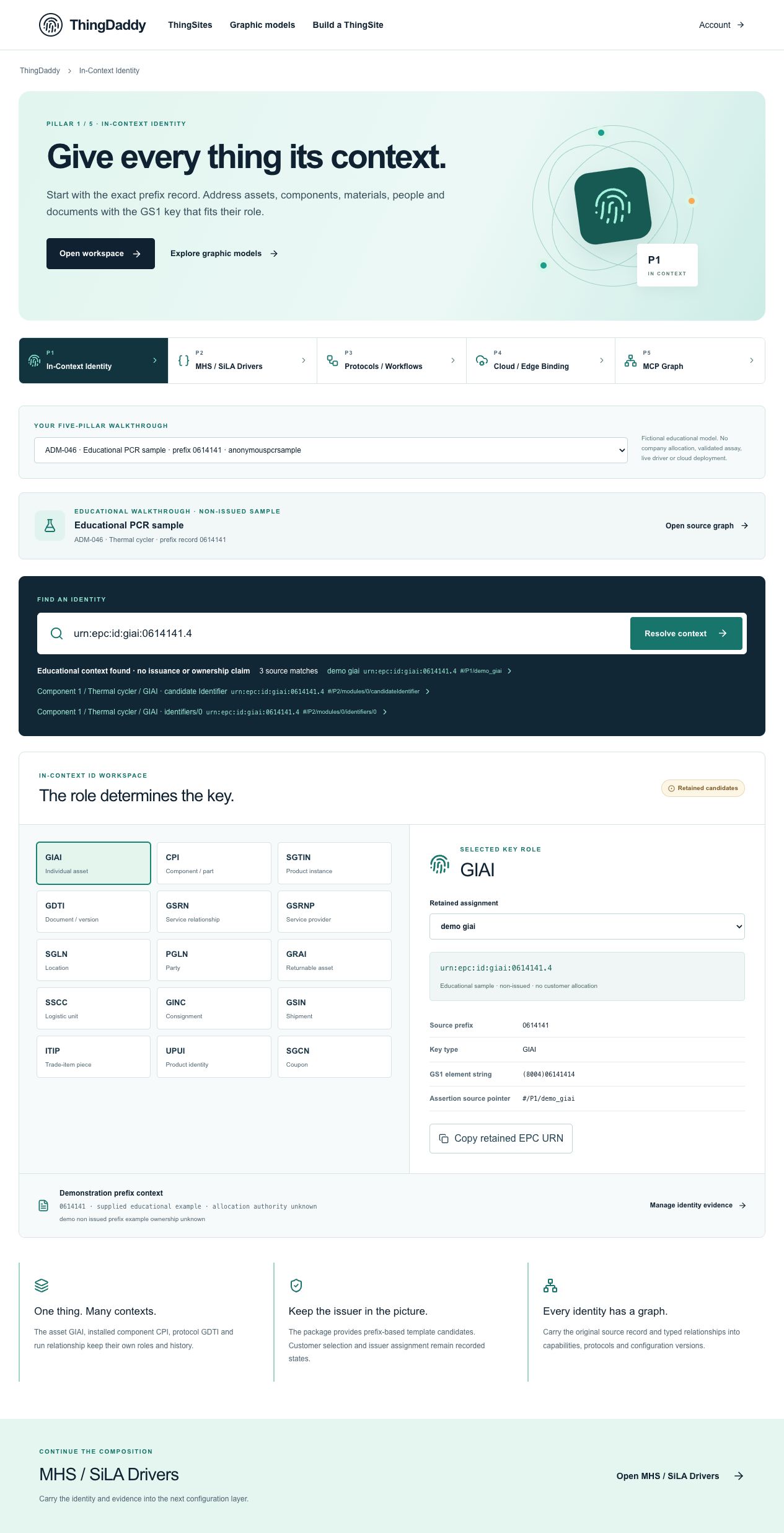
Earlier anonymous demonstration capture · Earlier local anonymous educational preview; not current physical execution or hosted acceptance · not evidence that this exercise has been performed. Open the image for full resolution.
Screenshot provenance
SHA-256 1e554f5987c892d50cf09e5db9d547abe7e4f4a5b5dee0e29165c85621701feaCaptured 2026-10-13T07:00:00.737Z. Source-package pin: 2f78a982141bda51ba64ea8ccb3a07f527eec3f77cf89baaa1f05c102197f6fd. Original screenshot bytes preserved.
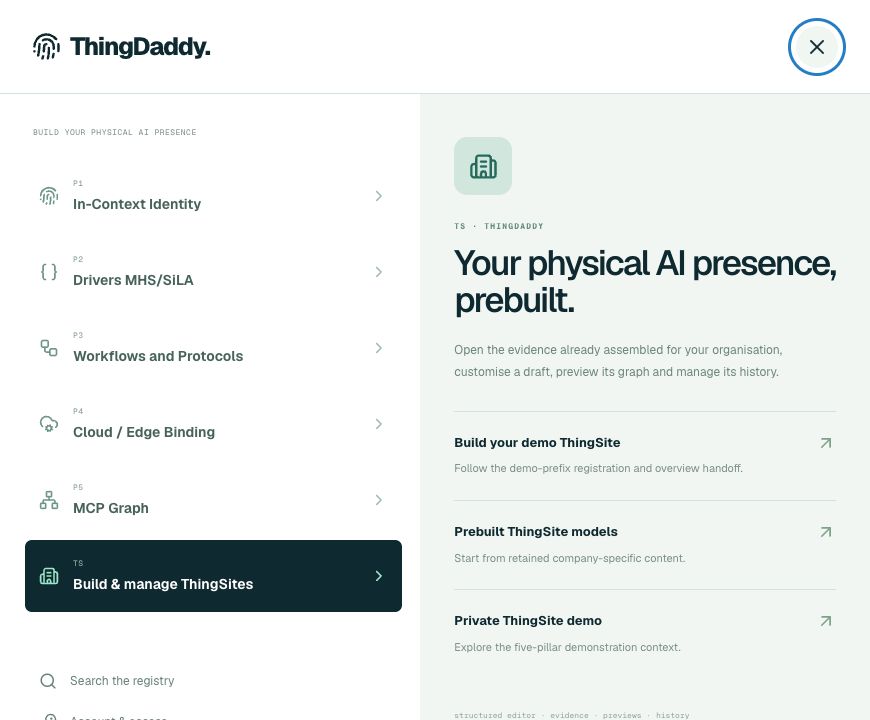
Earlier anonymous demonstration capture · Earlier local anonymous educational preview; not current physical execution or hosted acceptance · not evidence that this exercise has been performed. Open the image for full resolution.
Screenshot provenance
SHA-256 77a28f2bd3edc75d0ed77271791186ad7904621c259a0922dd5c9dcd5a1d302eCaptured 2026-10-13T06:38:18.834Z. Source-package pin: 2f78a982141bda51ba64ea8ccb3a07f527eec3f77cf89baaa1f05c102197f6fd. Original screenshot bytes preserved.
Step by step
01 Orient yourself in the introduction
Screen or control: Home, Products and the five pillar links
Why: The menu expresses the solution stack, while the introductory page supplies the purpose. Neither proves an implemented physical connection.
How: Read the five pillar labels and follow the learning link before selecting a protected library. Keep the current easy introduction available as your orientation.
What you should see: You can explain what each pillar contributes to one composition.
Verify: Name one record needed at each pillar without naming a company or inventing a key.
02 Compare discovery with exact resolution
Screen or control: Prefix & identity and Resolve context
Why: A display label can lead to several distinct source records. Selecting a label cannot establish equivalence between them.
How: Use the anonymous P1 resolver for the supplied GIAI. Compare its source occurrences with the same object in P5 rather than treating the result count as a count of machines.
What you should see: The sample retains its demonstration prefix and exact existing identity.
Verify: Check the source pointer on every result and retain the non-issued state.
03 Read the access boundary
Screen or control: Account and the private workspace gate
Why: The platform must protect client context while allowing public education to remain useful.
How: If a protected page refuses access, record that limitation and continue in the anonymous sample. Do not change roles or substitute another customer record to finish an exercise.
What you should see: Public education remains available; private records remain scoped.
Verify: A refusal is not evidence that the company has no data, and a successful login is not company authority.
What is happening under the surface
A search term is a discovery input, not a new identifier. Preserve the original prefix, key and source assertion returned by the selected record.
The account principal, the selected record and the authority to amend that record are separate facts. A signed-in account is not automatically a company-authorized decision maker.
Common mistakes
- Counting matched occurrences as separate physical units.
- Using navigation or account ownership as evidence of customer authority.
The records an agent needs
Discovery is a human navigation step. An agent still needs the exact retained identity, source occurrence and authorization scope; none is inferred from the search label.
Exact retained identities
urn:epc:id:giai:0614141.4Anonymous package occurrence pointers
#/P1/prefixEvidenceFields or record paths to inspect
source_prefixstateallocation_authority_evidencePointers locate records; hashes pin bytes; lesson numbers locate teaching material. None substitutes for an applicable assigned GS1 identity.
Apply what you learned
Draw a short route from introduction to exact sample identity to source evidence.
Prepare these outputs
- A five-pillar role description.
- The exact sample GIAI and at least one source pointer.
- A sentence distinguishing discovery from permission.
Review your work against these checks
- The prefix and identifier are unchanged.
- Private access remains unchanged.
- No company, installation or execution claim is inferred.
Check your reasoning
What does finding a source record by name establish?
This answer stays in page memory, is cleared when you leave, and is not sent or recorded as certification, validation or authority.Source and current boundaries
Authored teaching about the current navigation and protected source boundary. The anonymous resolver searches only its fixed educational model.
Reading, answering a question and opening a diagram do not issue identifiers, validate a scientific method, establish company authority, commission an environment or authorize physical action.