2011 · Protocols and participants
Keep procedure, evidence, decisions and exceptions together
Review a step’s source statement and constraints while distinguishing expected outputs from observations and approval decisions.
Open a workspace beside this lesson. Protected links keep their existing access gates; no new permission is granted by this course.
Opening the fixed anonymous evidence graph…
Why this matters
A procedure needs requirements, exceptions and evidence, not only its happy-path action.
The same source occurrence must support every tab so a reader can reproduce the review.
Read the screen with the explanation
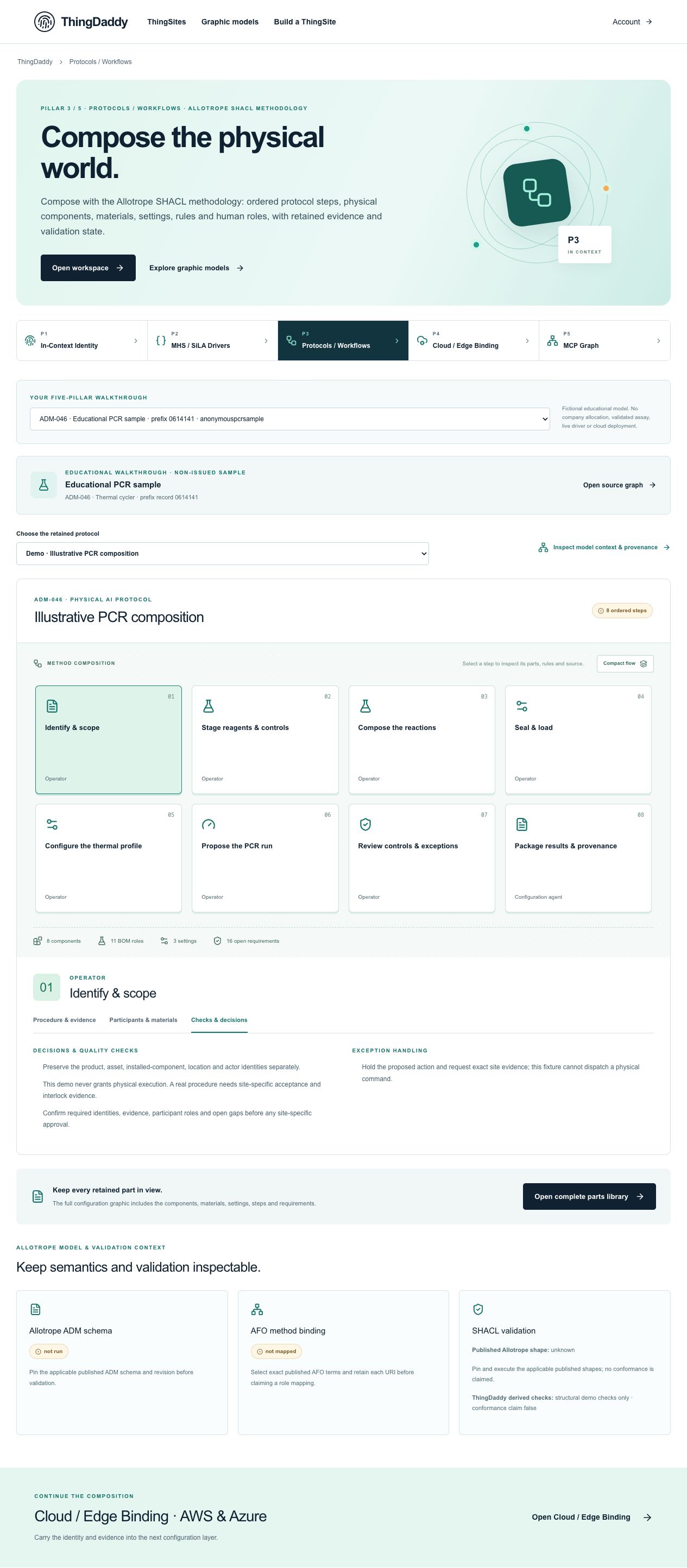
Earlier anonymous demonstration capture · Earlier local anonymous educational preview; not current physical execution or hosted acceptance · not evidence that this exercise has been performed. Open the image for full resolution.
Screenshot provenance
SHA-256 69488b5deed13fdbbf0503f031ec70da27eb371d4c5bc8da33e6a670376b075dCaptured 2026-10-13T06:47:14.808Z. Source-package pin: 2f78a982141bda51ba64ea8ccb3a07f527eec3f77cf89baaa1f05c102197f6fd. Original screenshot bytes preserved.
Step by step
01 Read the actual instruction
Screen or control: Review controls & exceptions · Procedure & evidence
Why: Begin with what the retained source actually says.
How: In P3 select step 7, Review controls & exceptions. Read its instruction, GDTI and evidence locator.
What you should see: The selected record is #/P3/protocolTemplates/0/ordered_steps/6 and step GDTI 00106.1.
Verify: Copy the locator as a locator, not an external laboratory record or historical execution receipt.
02 Inspect the required roles and expected records
Screen or control: Participants & materials
Why: Expected control evidence is not an observed control result.
How: Switch to Participants & materials. Read exact material and service references plus Expected outputs.
What you should see: Referenced controls and output definitions remain separate identities.
Verify: State which displayed records are definitions and which actual observations are not present.
03 Read the exception path
Screen or control: Checks & decisions
Why: Failures and missing evidence must affect the proposed action.
How: Read decisions, quality checks and exception handling. Identify the instruction to hold a proposed action when exact site evidence is missing.
What you should see: The step retains a review/hold boundary rather than fabricating a successful result.
Verify: Record at least one requirement and one exception path, with their array pointers in the selected step.
04 Inspect the exact step source
Screen or control: Open selected step in P5 · Inspect exact JSON · Public package link
Why: The graph definition and full procedure record are complementary views.
How: Inspect the step node in P5, then read the package step object for full arrays. Compare the source ID and zero-based occurrence.
What you should see: P5 exposes exact identity and relationship provenance; the package retains the detailed procedure/check arrays.
Verify: Do not claim the small graph node JSON contains all protocol text. Retain both source locations in your receipt.
What is happening under the surface
procedureDetail preserves the authored instruction. evidence identifies its source locator and fictional scope.
decisionRules, qualityChecks and exceptionHandling remain distinct arrays.
expectedOutputs names definitions or expected artifacts; it does not assert that a measured result exists.
Common mistakes
- An expected output is not evidence that it was produced.
- The graph node is not a replacement for the source step object.
- A review rule is not a completed reviewer approval.
The records an agent needs
An output definition, a required observation, a measured observation and a reviewer decision must not be flattened into one “result”. This lesson reviews authored procedure context only.
Exact retained identities
urn:epc:id:gdti:0614141.00106.1Anonymous package occurrence pointers
#/P3/protocolTemplates/0/ordered_steps/6#/P3/protocolTemplates/0/ordered_steps/6/procedureDetail#/P3/protocolTemplates/0/ordered_steps/6/decisionRules#/P3/protocolTemplates/0/ordered_steps/6/qualityChecks#/P3/protocolTemplates/0/ordered_steps/6/exceptionHandling#/P3/protocolTemplates/0/ordered_steps/6/expectedOutputsFields or record paths to inspect
procedureDetailevidencedecisionRulesqualityChecksexceptionHandlingrequiredInputRolesexpectedOutputsPointers locate records; hashes pin bytes; lesson numbers locate teaching material. None substitutes for an applicable assigned GS1 identity.
Apply what you learned
Write a readiness review for step 7, including its failure path.
Prepare these outputs
- Selected definition identity and evidence locator.
- One procedure requirement, one quality check and one exception-handling statement.
- An explicit list of missing observed control data and approvals.
Review your work against these checks
- The same exact step supports all notes.
- Expected and observed records remain distinct.
- No assay validity or control-performance claim is made.
Check your reasoning
The page lists an expected output record. What does that establish?
This answer stays in page memory, is cleared when you leave, and is not sent or recorded as certification, validation or authority.Source and current boundaries
Screen basis: the anonymous public educational fixture at /api/demo/pillars, namespace 0614141. No private company record is read by this course.
Pinned assessed package SHA-256: b06ee255d0943a048511092595db4b98281b9b761d1910d19e6c3dba82591d94. Its complete graph contains 329 nodes and 231 directed relationships; original excluded assertions remain separately retained provenance. Lesson locators are educational numbers, not issued GS1 keys.
Scope: fictional authored records, non-issued identity proposals, unknown authority, no physical command, assay validation, cloud deployment or execution authorization.
fictional authored, non-issued, read-only
b06ee255d0943a048511092595db4b98281b9b761d1910d19e6c3dba82591d94Open primary referenceReading, answering a question and opening a diagram do not issue identifiers, validate a scientific method, establish company authority, commission an environment or authorize physical action.