2012 · Protocols and participants
Read ADM, AFO and SHACL states precisely
Distinguish model applicability, ontology mapping, published-shape validation and custom structural checks.
Open a workspace beside this lesson. Protected links keep their existing access gates; no new permission is granted by this course.
Why this matters
Standards vocabulary needs exact versioned references and measured validation results.
A populated diagram or closed graph is not formal conformance or scientific approval.
Read the screen with the explanation
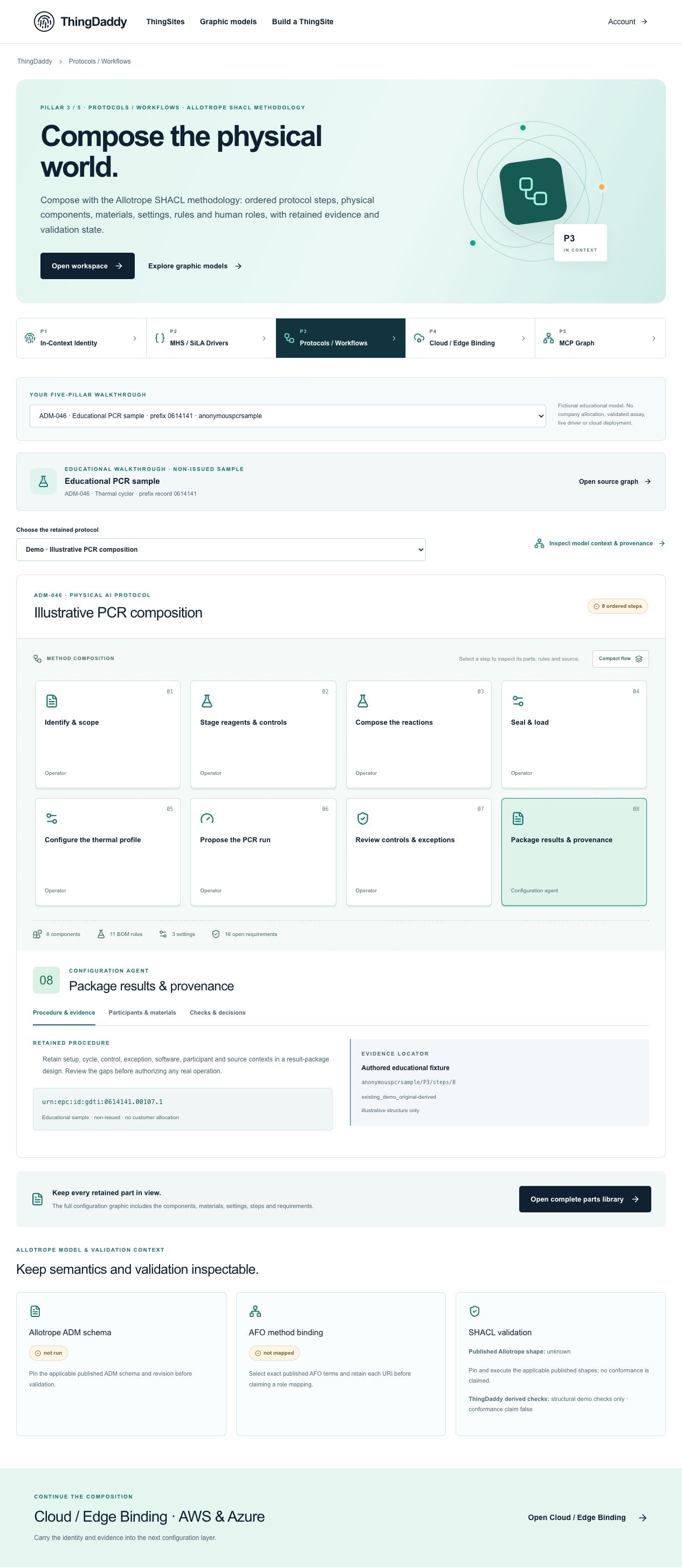
Earlier anonymous demonstration capture · Earlier local anonymous educational preview; not current physical execution or hosted acceptance · not evidence that this exercise has been performed. Open the image for full resolution.
Screenshot provenance
SHA-256 7a67ce1cd2d3873f68392c7e4ab2df5807e48bd74cdf5305b88f5664bab60dbdCaptured 2026-10-13T06:48:56.299Z. Source-package pin: 2f78a982141bda51ba64ea8ccb3a07f527eec3f77cf89baaa1f05c102197f6fd. Original screenshot bytes preserved.
Step by step
01 Read the model context
Screen or control: Allotrope model & validation context · Allotrope ADM schema
Why: A candidate label must not stand in for a pinned published model.
How: Open P3 and scroll to Keep semantics and validation inspectable. Read the ADM card and its requirement.
What you should see: The page reports not-run and asks for an applicable published schema/revision before validation.
Verify: In package JSON confirm governedModel.revision:null, schemaId:null and applicabilityState:unassessed.
02 Inspect the ontology gap
Screen or control: AFO method binding
Why: Mapping needs exact ontology terms, not similar words.
How: Read the AFO card and compare its status with the selected protocol object.
What you should see: The status remains not-mapped and the requirement asks for exact published AFO URIs.
Verify: Do not create an ontology URI from the displayed method title or claim mapping coverage from labels.
03 Separate published and custom validation
Screen or control: SHACL validation
Why: Custom graph checks do not inherit published-shape authority.
How: Read Published Allotrope shape and ThingDaddy derived checks separately. Open the package and read the retained custom checks.
What you should see: Published-shape validation has not run; structural-demo-checks-only reports conformance claim false.
Verify: Record the two validation states in different rows with their own source pointers.
04 Prepare evidence-backed next steps
Screen or control: Public package link · P3 open requirements count
Why: Gaps should guide safe work without manufacturing a pass.
How: Inspect typedGaps alongside validation objects and list the exact schema, terms, shapes, engine/version and result receipts needed next.
What you should see: The gap list remains explicit; no approval, driver test or physical execution becomes true.
Verify: Your readiness plan must retain the original unknown/not-run states until actual evidence is recorded.
What is happening under the surface
ADM-046 is a candidate model-slot label here; governedModel.applicabilityState is unassessed, revision and schemaId are null.
The protocol AFO term status is not-mapped. Published ADM schema validation is not-run; published SHACL valueState is unknown.
ThingDaddy custom checks cover educational structural invariants only and conformanceClaim is false.
Common mistakes
- A model-slot label is not an applicability verdict.
- A closed 329-node graph is not a SHACL pass.
- No schema-opening button is shown when schemaId is null; do not invent that control.
The records an agent needs
Schema selection, ontology mapping, constraint execution and scientific validation are distinct. The public fixture supplies structural demonstration context; it does not supply a formal published ADM/AFO/SHACL validation result.
Exact retained identities
urn:epc:id:gdti:0614141.00011.1Anonymous package occurrence pointers
#/P3/governedModel#/P3/protocolTemplates/0/method_AFO_term_status#/P3/publishedAllotropeSchemaValidation#/P3/publishedAllotropeShapeValidation#/P3/thingDaddyCustomShaclValidation#/P3/typedGapsFields or record paths to inspect
applicabilityStaterevisionschemaIdmethod_AFO_term_statusstatevalueStateconformanceClaimchecksPointers locate records; hashes pin bytes; lesson numbers locate teaching material. None substitutes for an applicable assigned GS1 identity.
Apply what you learned
Prepare a four-row semantic-validation readiness matrix.
Prepare these outputs
- ADM applicability/schema, AFO mapping, published shapes and custom structural checks as separate rows.
- Exact source pointers and current states.
- Required evidence and a proposed verification step for each gap.
Review your work against these checks
- No unknown is converted to passed.
- Custom checks are not described as published conformance.
- The plan is evidence collection, not assay or regulatory approval.
Check your reasoning
The custom checks say all graph endpoints resolve. What may you report?
This answer stays in page memory, is cleared when you leave, and is not sent or recorded as certification, validation or authority.Source and current boundaries
Screen basis: the anonymous public educational fixture at /api/demo/pillars, namespace 0614141. No private company record is read by this course.
Pinned assessed package SHA-256: b06ee255d0943a048511092595db4b98281b9b761d1910d19e6c3dba82591d94. Its complete graph contains 329 nodes and 231 directed relationships; original excluded assertions remain separately retained provenance. Lesson locators are educational numbers, not issued GS1 keys.
Scope: fictional authored records, non-issued identity proposals, unknown authority, no physical command, assay validation, cloud deployment or execution authorization.
fictional authored, non-issued, read-only
b06ee255d0943a048511092595db4b98281b9b761d1910d19e6c3dba82591d94Open primary referenceReading, answering a question and opening a diagram do not issue identifiers, validate a scientific method, establish company authority, commission an environment or authorize physical action.