2027 · Whole-site journey and practice
Distinguish private saved versions from local drafts
Read save, version, reopening and history evidence without inventing a durable lineage.
Open a workspace beside this lesson. Protected links keep their existing access gates; no new permission is granted by this course.
Why this matters
A saved configuration has to say which source snapshot and editing engine produced it. Otherwise a later tool change can silently reinterpret an earlier design.
A new publication or storage receipt does not authorize the proposed instrument or cloud action.
Read the screen with the explanation
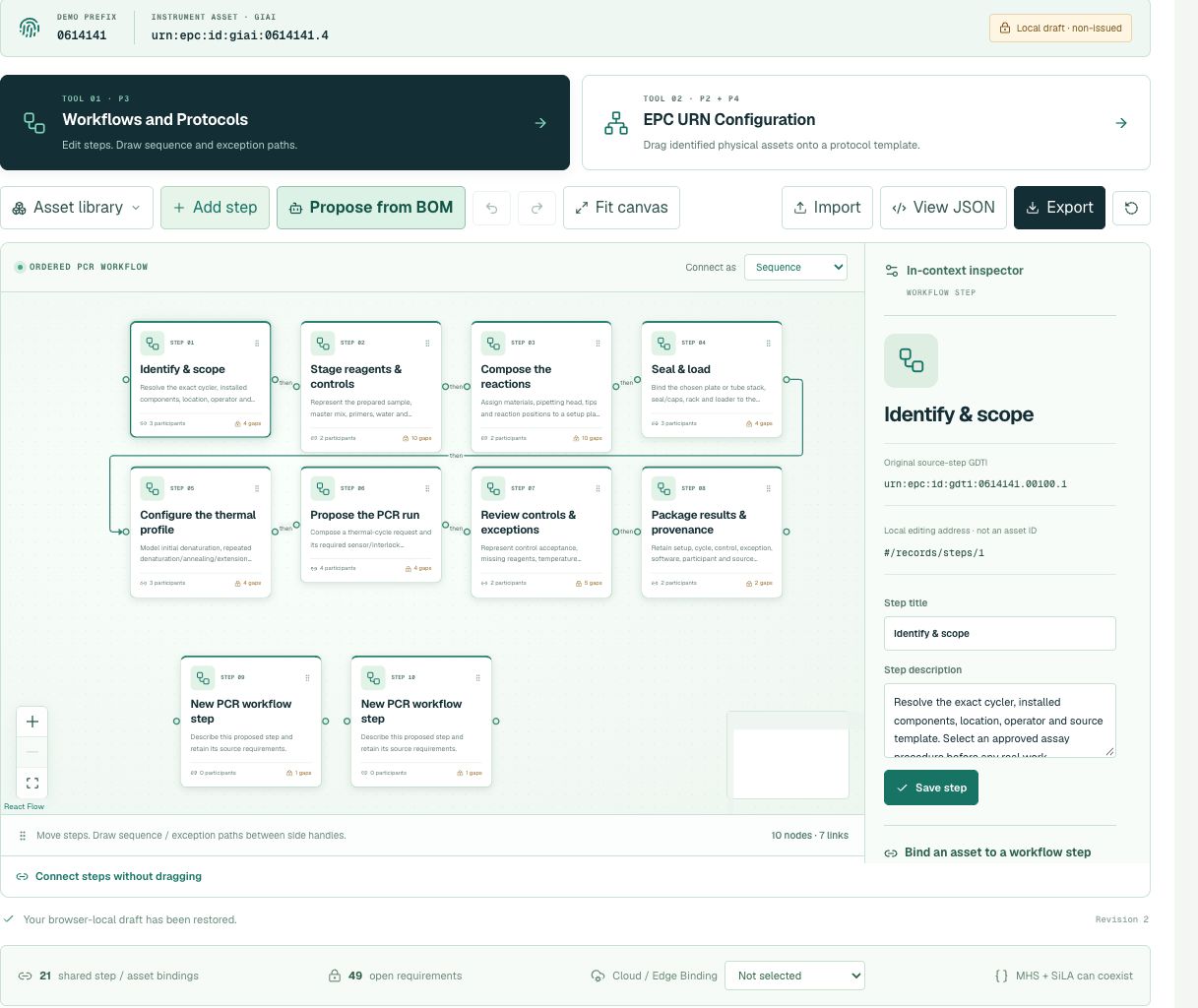
Earlier anonymous demonstration capture · Earlier local anonymous educational preview; not current physical execution or hosted acceptance · not evidence that this exercise has been performed. Open the image for full resolution.
Screenshot provenance
SHA-256 0b03bcb8a61121acaa05f0fc4994a852a4f66a6bcd5098960aab792576ce6c4eCaptured 2026-10-13T06:27:51.755Z. Source-package pin: 2f78a982141bda51ba64ea8ccb3a07f527eec3f77cf89baaa1f05c102197f6fd. Original screenshot bytes preserved.
Step by step
01 Read the selected private configuration
Screen or control: Authorized configuration maker and source/lineage view
Why: A title alone cannot establish which source or parent a design derives from.
How: In an already-authorized private maker, inspect the selected source and saved version. Record its exact recipe/engine pin and parent before making any teaching proposal. If access is absent, write the required evidence checklist instead.
What you should see: A source-bound baseline or an explicit access limit.
Verify: No foreign source or earlier version is substituted.
02 Separate preview from save
Screen or control: Preview and Save new version
Why: A preview proves a proposed projection, while save must prove an immutable stored envelope.
How: Review proposed commands and the projected graph. Save only an intended authorized educational proposal in that context. Capture the actual returned version and receipt; do not create a company decision or approval record.
What you should see: A preview result or an actual save receipt, clearly labelled.
Verify: Source facts are retained, and execution remains disabled.
03 Reopen the exact version
Screen or control: Commands and versions and the saved-version link
Why: A later “latest” page cannot prove the earlier recipe still exists.
How: Reopen the exact returned version under its scope. Compare its parent, recipe, engine, original graph and unknown fields with the saved receipt. Retain any failed retrieval rather than declaring success.
What you should see: An exact readback result with its verification limit.
Verify: No local draft or changed engine is silently presented as the saved design.
What is happening under the surface
Private configuration recipes preserve the selected source, exact commands, parent version and replay-engine version. Hashes bind bytes; they do not replace a typed protocol, service or document identity.
The page-by-page private save exercise must be performed in an authorized selected context. The anonymous public sample is read-only, and the browser-local demo has a different persistence model.
Common mistakes
- Describing a displayed preview as a successful immutable save.
- Replaying an earlier recipe through an unpinned changed engine.
The records an agent needs
Content hashes and internal version locators support integrity and retrieval. They do not issue a GDTI or GSRN/SRIN, and publication is not execution.
Exact retained identities
No assigned value is supplied for this exercise. Do not invent one.
Anonymous package occurrence pointers
No assigned value is supplied for this exercise. Do not invent one.
Fields or record paths to inspect
versionHashparentVersionHashreplayEngineSha256baseHashsourceArchivescommandsPointers locate records; hashes pin bytes; lesson numbers locate teaching material. None substitutes for an applicable assigned GS1 identity.
Apply what you learned
Write a durable-save acceptance checklist, then use actual receipts only if the existing private scope permits it.
Prepare these outputs
- Source, parent and engine pins.
- Preview/save/readback distinctions.
- An explicit list of authority and execution gates not granted by saving.
Review your work against these checks
- No successful save is claimed without an actual receipt.
- Original versions remain addressable.
- Private source data stays within its authorized context.
Check your reasoning
What is the strongest evidence that a specific version survived saving?
This answer stays in page memory, is cleared when you leave, and is not sent or recorded as certification, validation or authority.Source and current boundaries
This is a governed private acceptance exercise, not a claim that a learner has already performed an immutable save or company-authorized amendment.
Reading, answering a question and opening a diagram do not issue identifiers, validate a scientific method, establish company authority, commission an environment or authorize physical action.